AI Researcher · Engineer · Founder

Mikołaj Stryja

PhD Candidate, TU Delft — AI for Radiotherapy · Founder & CEO, ArtNovation

Building AI systems that understand, simulate, and optimise the physical world.

I work at the intersection of artificial intelligence and the physical world — building deep-learning systems for proton-therapy dose calculation and adaptive radiotherapy at TU Delft, and delivering applied AI products to industry and healthcare through ArtNovation.

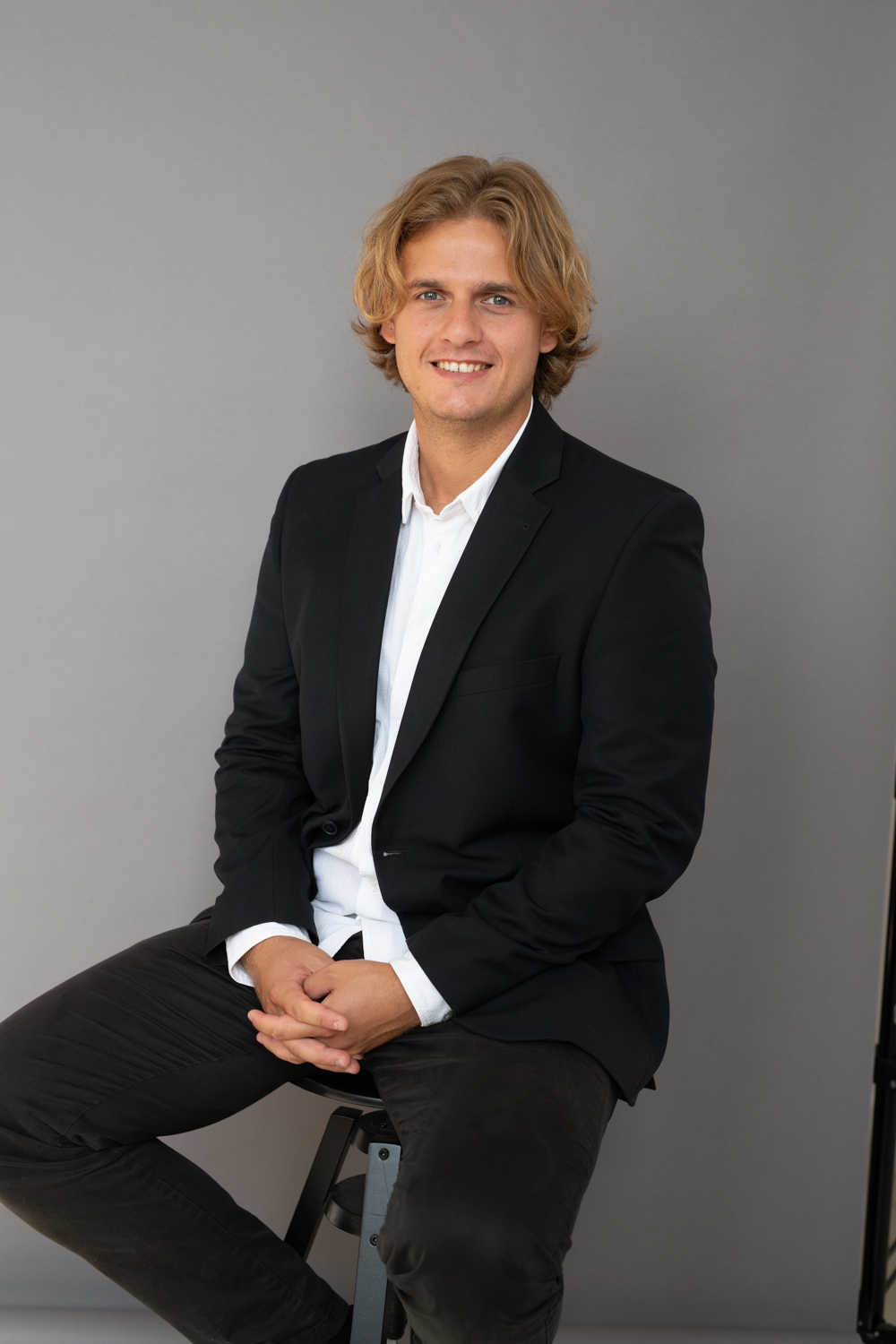
Portrait of Mikołaj Stryja
Delft, Netherlands
Research PhD Candidate, TU Delft Biomedical Intervention Optimisation Lab (BIOLab)
Company Founder & CEO, ArtNovation Scaled from zero to a profitable, growing business
Selected by Entrepreneur First 50-person cohort from 1,100 candidates, Berlin
Domains Radiotherapy · Medical imaging · Industrial AI AI connected to physical & clinical systems
Clients & partners
Selected work

Projects where AI meets the physical world

Each card is an executive overview. Open a case study for the full context, and expand the technical deep-dive for implementation detail.

Healthcare AI Machine Learning Specialist 2021–2022

3D Segmentation of CT/MRI Volumes

Automated deep-learning segmentation of volumetric CT and MRI scans for medical-imaging products.

Designed and trained 3D segmentation models used in a commercial medical-imaging setting.

3D segmentationCT/MRIPyTorchMedical imaging
About

Research, engineering & company building

I am a PhD candidate in the Biomedical Intervention Optimisation Lab (BIOLab) at TU Delft, developing fast deep-learning dose engines and AI-driven optimisation methods for adaptive radiotherapy. My research focuses on angle-aware proton dose calculation, robust treatment planning, and clinically deployable ML systems that remove computational bottlenecks while preserving dosimetric accuracy.

In parallel, I am the founder and CEO of ArtNovation, an applied-AI company I have led from zero to a profitable, growing business delivering products across industry and healthcare. This dual path — rigorous research and hands-on company building — lets me move between scientific modelling, engineering implementation, and real-world deployment without losing a coherent specialisation in AI systems connected to physical and clinical reality.

Download full CV (PDF)
Core stack

PythonC++PyTorchNumPyCuPyDICOMONNXMCsquareMonte Carlo Sim.

Languages

Polish (native)English (C1/C2)German (basic)

Selected achievements

  • AGH Rector's Grant — AI for CML diagnosis (2020–21)
  • AGH Rector's Grant — intelligent prosthetics (2020–21)
  • World Champion, Free Flight Models F1E (2015)
  • NASA CanSat — 20th place worldwide (2017)

Experience

  • Sep 2022 — Present
    PhD Candidate — AI for Adaptive Radiotherapy
    TU Delft · Medical Physics & Technology (BIOLab) · Delft, NL

    Developed ADoTA, an angle-dependent transformer dose engine for fast pencil-beam-scanning proton therapy dose calculation. Investigating ML-based robust planning and adaptive radiotherapy workflows that reduce dose to organs at risk while preserving tumour coverage.

  • Aug 2019 — Present
    Founder & CEO
    ArtNovation · Gliwice, PL

    Founded and lead an applied-AI company, scaling it from zero to a profitable, growing business. Deliver AI products across industry and healthcare for clients including IT4KAN (Synectic), TenderPro, Boryszew, COIG S.A., Quantitas Solutions and Nebucode.

  • May 2021 — Sep 2022
    Machine Learning Specialist
    Future Processing Healthcare (GrayLight Imaging) · Remote / PL

    Designed and trained deep-learning models for automated 3D segmentation of CT/MRI volumes (PyTorch, TensorFlow, ITK, PyVista).

Education

  • 2022 — Present
    PhD, Radiation Science & Technology
    Delft University of Technology (TU Delft) · Delft, NL
  • Apr — Jun 2022
    Berlin Cohort Member — Entrepreneur First
    Entrepreneur First (international talent investor) · Berlin, DE

    Selected from 1,100 candidates to a 50-person cohort.

  • 2019 — 2021
    M.Sc., Mechatronics Engineering — GPA 4.5/5.0
    AGH University of Science and Technology · Kraków, PL

    Thesis: non-invasive soft-tissue pathology evaluation based on advanced processing methods.

  • 2016 — 2020
    B.Sc., Automatics and Robotics — GPA 4.5/5.0
    AGH University of Science and Technology · Kraków, PL

    Thesis: intracranial haemorrhage detection using advanced machine-learning algorithms.

Capabilities

One system, research to production

The reason a single person can take an idea from a scientific model to a system running in production — capabilities that span the whole arc.

01 — Understand & simulate

Research & science

AI research & model development

Custom neural architectures, transformer and LLM-based systems, from problem framing to trained, validated models.

Capability competitors can't buy off the shelf — a defensible technical advantage.

PyTorchTransformersONNXCuPy
Technical detail

ProblemProblems where off-the-shelf models fail and a new architecture is the actual deliverable.

DepthPyTorch, custom training loops, ONNX export, GPU acceleration, rigorous quantitative evaluation.

Scientific & physical AI

Physics-aware surrogates and simulators that approximate expensive numerical solvers in real time.

Orders-of-magnitude faster decisions without sacrificing scientific credibility.

Scientific MLMonte CarloSurrogatesSimulation
Technical detail

ProblemModelling physical systems where accuracy, physics and speed all matter at once.

DepthMonte-Carlo ground truth, physical constraints encoded in the model, dosimetric / engineering validation.

02 — Data & engineering

Build & systems

Medical imaging & healthcare AI

Segmentation, detection and analysis pipelines for CT/MRI and histopathology, built for clinical use.

AI that clinicians can trust and that survives contact with real hospital data.

DICOM3D/4DITKSegmentation
Technical detail

ProblemComplex 3D/4D medical data and clinically deployable decision support.

DepthDICOM, 3D volumetric models, ITK/PyVista, robustness and generalisation across anatomies and sites.

Data platforms & system architecture

Data pipelines and platforms for secondary use of medical and industrial data, designed for security and compliance.

A durable data foundation — the precondition for every downstream AI capability.

Data pipelinesTime seriesPoint cloudsCompliance
Technical detail

ProblemTurning fragmented, sensitive data into infrastructure AI can safely run on.

DepthIngestion and processing of imaging, time-series and point-cloud data; access control and reproducibility.

03 — Optimise & ship

Deploy & lead

Production deployment & MLOps

End-to-end delivery: packaging, optimisation and deployment of models into real products.

Research that actually reaches users — in the clinic, the plant or the product.

MLOpsONNX RuntimeInference opt.Monitoring
Technical detail

ProblemThe gap between a working notebook and a system running reliably in production.

DepthInference optimisation, ONNX runtimes, monitoring, versioning and reproducible builds.

Technical strategy & product leadership

Technology strategy, partnerships and company building — translating research into products and revenue.

A coherent path from a research idea to a deployed, commercially viable system.

StrategyPartnershipsR&D leadershipProduct
Technical detail

ProblemDeciding what to build, why, and how to get there as an organisation.

DepthRoadmapping, R&D direction, stakeholder alignment across scientific, clinical and commercial teams.

Research & publications

Peer-reviewed work & preprints

  • 2026

    Angle-dependent dose transformer algorithm for fast proton therapy dose calculations

    Stryja, M., Lathouwers, D., & Perkó, Z.

    arXiv:2602.04375 [physics.med-ph]

    A transformer dose engine that predicts full 3D proton dose distributions without reorienting the computational grid, reaching gamma pass rates above 99% at beamlet level while dramatically reducing calculation time.

  • 2022

    Deep Learning Meets Computational Fluid Dynamics to Assess CAD in CCTA

    Malawski, F., Gośliński, J., Stryja, M., et al.

    LNCS — Applications of Medical AI (AMAI 2022, MICCAI), pp. 8–17

    Combining deep learning with computational fluid dynamics to assess coronary artery disease from coronary CT angiography.

Contact

Let’s build something.

Open to research collaborations, applied-AI projects, and conversations about turning ideas into deployed systems.